Record Sales Almost Killed One of My Clients
If he's selling skateboards and he builds the most beautiful campaign in the world, but he runs it in a retirement community, he sells nothing. Walk that same mediocre flyer into a skate park and he'll sell some. Make it a great flyer at the skate park and he'll sell a lot. Right people, right place
Last year I had a manufacturing client hit the best stretch of his life. Record month, then another one right behind it. On paper it looked incredible. The business was finally taking off.
Those record months almost put him under.
Here's what was actually happening. Every new order meant he had to finance a pile of materials and labor on the front end, weeks before the customer ever paid him. So the more he sold, the more cash walked out the door ahead of the cash coming in. Growth wasn't the reward. Growth was the thing draining the tank.
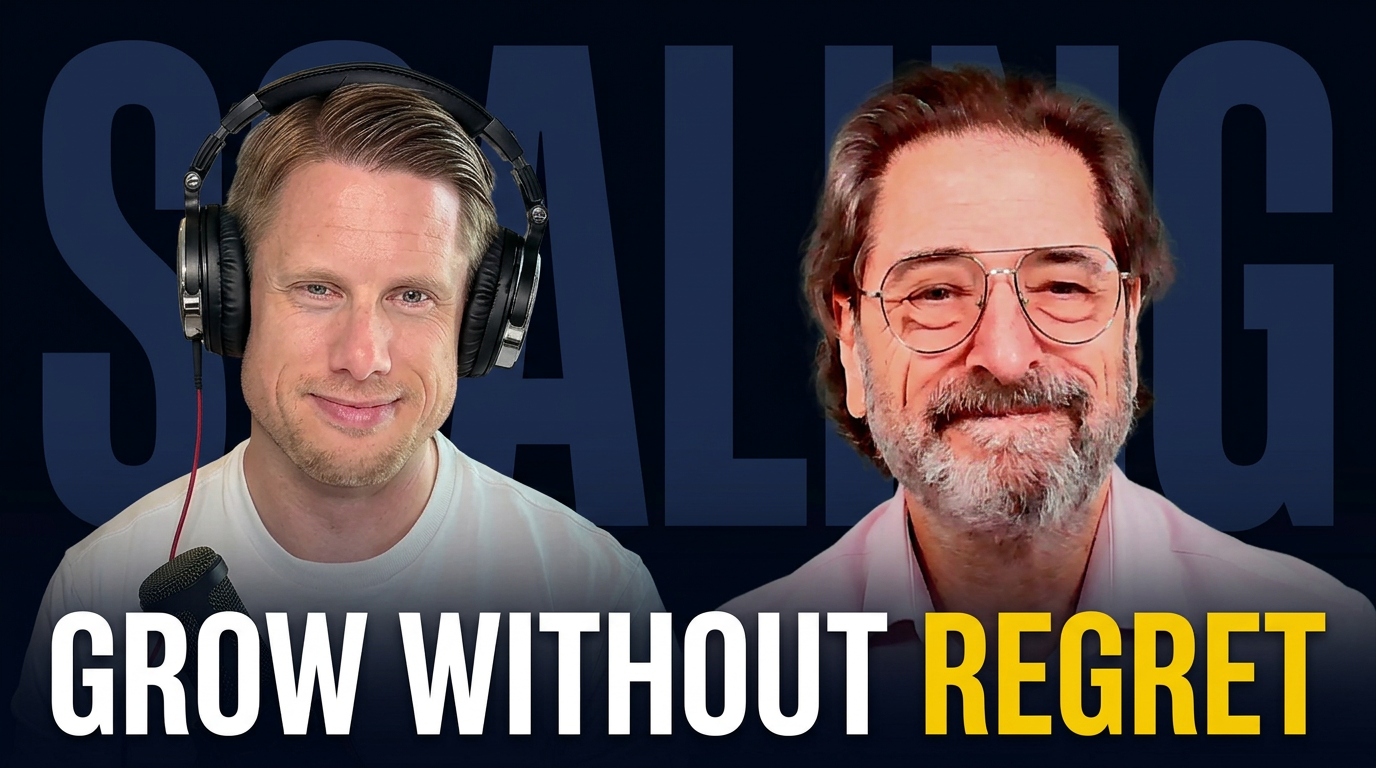
I was thinking about him the whole time I sat down with Doug Barra for the latest Coach's Corner on the Ownership Advantage. Doug's been coaching owners for twenty years, and before that he spent twenty-five as a software engineer. He tried to run his own custom programming shop after getting laid off three days before his wedding, watched it not work, and that failure is honestly what pointed him toward coaching in the first place. He learned the hard way that most people don't really understand what it takes to run a business. So now he teaches it.
And the thing he kept circling back to is the one owners resist most when they're chasing growth: more business does not always mean more money.
Everybody wants to talk about marketing
Whenever Doug starts with a new owner, marketing comes up almost immediately. Should I do Facebook? Should I be on TikTok? Should I pay someone to get me "found by AI"? And his first question back is always the same. Who are you actually trying to reach?
He's got this line I love. If he's selling skateboards and he builds the most beautiful campaign in the world, but he runs it in a retirement community, he sells nothing. Walk that same mediocre flyer into a skate park and he'll sell some. Make it a great flyer at the skate park and he'll sell a lot. Right people, right place. The strategy barely matters until that part's solved.
Then he took it further with a hurricane analogy, which, living in Miami, he's got plenty of. Everyone wants to buy hurricane impact windows to protect the house. But if your roof isn't strapped down, those windows end up in the yard when the roof peels off. Marketing is the windows. Your foundation is the roof. And most owners want to spend on windows before the roof's even secured.
I see this all the time with the "I need to be found" crowd. Folks spent a year and a half on SEO. So I ask them, okay, how many clients did SEO actually bring you? For a lot of them the honest answer is zero. A year and a half of work, nothing to show, and now they want to pour the same energy into AI search. Before we do that, let's find out if the machine even works once someone shows up.
What breaks first
This is the lens I keep coming back to in every scaling conversation, and Doug landed on it on his own, which tells you something. If I gave you 10x more leads tomorrow, what breaks?
Because something will. Maybe your sales process can't handle the volume. Maybe your conversion looks amazing right now because you've had one lead and one sale, and that falls apart at a hundred. Maybe the work gets delivered late and you start losing clients out the back door as fast as they come in the front. Doug said it flat out: he knows plenty of businesses he could put under just by tripling their lead flow. Not because leads are bad. Because the business underneath can't carry the weight yet.
You can market yourself right out of business. I've watched it happen.
Growth sucks cash
Growth sucks cash. That's the part that's easy to skip.
If you sell a physical product, you're paying for inventory before the customer pays you. That's the manufacturing client I opened with. But it cuts the other way too. If you take money upfront and spend it before you've delivered the service, you're in the exact same hole, you just don't feel it until the bill for delivery shows up.
And it gets worse the bigger your customers are. Doug and I traded stories on this. I had a client doing sewer and storm drain work, a ton of it for local municipalities, and a huge chunk of their revenue sat in receivables on ninety day payment cycles, minimum. Government pays slow. Big corporates pay slow, and they can freeze a contract on a moment's notice. Insurance is its own maze, and we've both watched practices nearly fold because they genuinely didn't know how much of their billing was actually getting paid.
None of that shows up if you're only looking at the top line and celebrating.
The crystal ball
So what do you do about it? Doug breaks financial management into three pieces, and the third one is the one most owners have never built.
First is accounting. Your bookkeeping, kept current, handled by someone who knows what they're doing. Second is a financial plan, which is not your budget. The budget is what you can spend based on what you know today. The plan looks forward and asks what the numbers have to look like to get where you want to go.
The third piece Doug calls his crystal ball, and it's a true cash flow forecast. Not the tool inside QuickBooks. He builds it straight from the bank. What actually came in, what actually went out, updated every single week. Do that consistently and you can see six to eight weeks ahead with real accuracy. You'll know before payroll week whether the money's going to be there.
And that's the whole point. Time is what gives you options. If I wake up tomorrow and there's a hundred bucks in the account and payroll is ten grand, I've got nothing. But if I can see the gap coming four or six weeks out, now I've got levers. I can call a vendor early and push a payment, and by the way they treat you a lot more kindly when you come to them ahead of time instead of just going quiet. I can trim something that's puffed up on the P&L. I can tap a line of credit for a two week timing gap, which is exactly what it's there for. Or worst case I know I need to go sell my way out of it, and I know precisely how much I need to sell.
One rule Doug was firm on: build the forecast on what you actually know is coming, not what you hope shows up. Underestimate. If you want to play with the optimistic version, do it as a side exercise, then take those numbers back out so the sheet tells you the truth.
Do it yourself first, then hand it off
I know how this sounds to an owner who already feels underwater. One more thing to do every week. But I'll tell you from experience, weekly is the easy version. Wait until month end or quarter end and you're staring at a charge from three weeks ago going, what was that? Five minutes a day and half an hour on Friday is nothing compared to reconciling ninety days of mystery all at once.
Do it yourself at first. Not forever, just long enough to actually understand it and build the habit. Then you hire it out, a bookkeeper, eventually a controller, eventually the full finance function. But you can't hand off a thing you've never understood. That's how owners end up trusting a number they can't check.
I don't teach this from a mountaintop. We went through our own four-weeks-from-closing-the-doors stretch. I know exactly what it feels like to be short, out of runway, and out of levers. The reason I care so much about the boring weekly cash review is that it's the difference between seeing the wall coming and hitting it at full speed. One of those you can steer around. The other one you don't.
That's really the whole conversation with Doug. Chase the growth if you want. Just make sure the thing you're growing can survive getting what it asked for.
---
If you're anywhere near Miami on August 6, Doug and I are running a live working session on hiring the right people, called Hiring Without Regret. It's not a lecture, you'll do the work in the room, and we're keeping it to about thirty owners.