Revenue Isn't the Scoreboard: 6 Lessons From Supersun Electric
Supersun Electric is a residential and commercial service electrical company in Round Rock, Texas, owned by Jessie and Gabe Lensing. They joined Tanner O'Brien on The Ownership Advantage podcast to talk about their first two years in business.
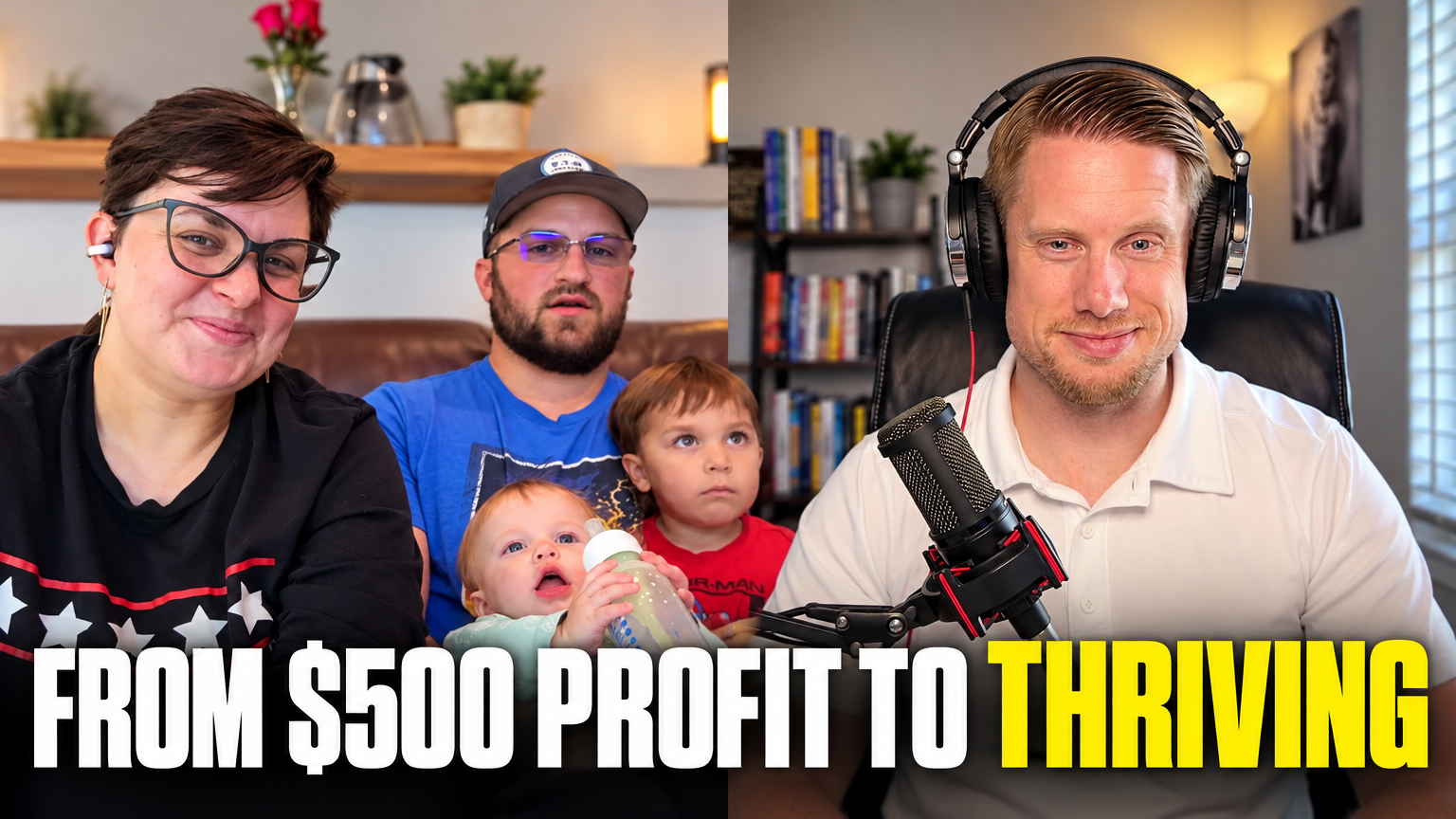
Supersun Electric is a residential and commercial service electrical company in Round Rock, Texas, owned by Jessie and Gabe Lensing. They joined Tanner O'Brien on The Ownership Advantage podcast to talk about their first two years in business.
Two years...Same revenue, different profit. From $500 in profit to $50,000+.
Nothing about the market changed. The owners changed how they ran the business. If you own a home service or trades business, these are the six lessons worth stealing.
---
Lesson 1: Revenue Is Not Profit
Year one looked like a success from the outside. People at networking events asked if they were a franchise. Over half a million dollars moved through the business.
And $500 stayed.
"We did $535,000 in top line revenue and $500 in profit. So we spent all of it. Not the right way to run your business, by the way."
The problem wasn't effort. Jessie worked six months with a numb leg from a herniated disc because stopping meant the business stopped. The problem was that nobody could read the numbers. In their words, they had no idea how to read a P&L, how to make sure they were profitable, or how to make sure a job was priced appropriately.
Do this: Look at last month's P&L. If you can't explain where every major dollar went, that's your first problem to solve. Not more leads.
Lesson 2: Replace Feelings With Data
The Lensings were honest about how most early decisions got made:
- A $10,000 lead program. "I really feel like it'll be a good idea." It wasn't what they thought.
- Open availability, 8 AM to 8 PM, seven days a week, so the market could tell them which days should be their weekends. The market booked all of it.
- Hiring a team without systems, real interviews, appropriate pay or clear job expectations.
Year two, the question changed. Not "how do I feel about this?" but:
- What's the financial impact on the business?
- What's the longevity?
- What does it cost if we're wrong?
"We do data based decisions instead of feelings based decisions, which is huge."
Do this: Before your next spend over $1,000, write down the number it needs to return and by when. If you can't name the number, you're deciding on feelings.
Lesson 3: Average Ticket Is a Profit Lever
One of the biggest moves in year two wasn't more customers. It was more value per customer. Their average ticket has grown from roughly $2,000 to about $3,500 `[confirm]`. That one number has a massive impact on profit, because the cost of the van, the drive and the technician's time doesn't change much between a small call and a bigger one.
They're also bidding bigger work: a recent budgetary bid came in at $190,000 to $320,000, on a business whose average ticket is around $3,500. And they know how to staff it.
Do this: Pull your average ticket for the last 90 days. Then list three things a customer on a typical call would genuinely benefit from that you're not offering today.
Lesson 4: Systems Before Staff
Year one, they hired team members before they had any way to tell those people how to do their jobs, or any way to tell whether the job was getting done. Around their one-year anniversary, with one week left on the run rate, they had to let the whole team go. Jessie was seven months pregnant at the time.
They also turned down the only loan they were offered, at 45% interest.
Year two, they built the systems first: processes, clear expectations, ways to tell employees how to do their job. Now Gabe has an electrician and an installer doing most of the field work, and he's training them to run calls. His time goes to building systems.
The result, when another owner asked what was going wrong in their business:
"I don't know that anything's on fire right now. Most of the stuff's running really smooth."
Do this: Pick the one task you'd have to explain to a new hire first. Write it down this week as a step-by-step checklist. That's your first system.
Lesson 5: Get a Third-Party Check (and Ask Them to Be Blunt)
The Lensings didn't wait until they had it figured out. They put people around them who would tell them the truth: their ActionCOACH business coach, Andy, plus a financial advisor. Before any big decision, they run it past both, then make the call with the context only the owners have.
What they specifically asked for was bluntness.
"I would much rather have the blunt, honest answer that I can action on in five minutes than the sugar coated one that I have to try to figure out for the next two hours."
They'd had a coach before who, no fault of his own, offered band-aid solutions. What they needed was someone who'd tell them if they were running the business into the ground.
Do this: Name the person who will tell you your idea is bad before you spend money on it. If nobody comes to mind, that's the gap.
Lesson 6: Get Off the Roller Coaster at the Right Stop
Jessie and Gabe described the emotional cycle almost every owner goes through:
1. Uninformed optimism: "It's gonna be hard, but we got this."
2. Informed pessimism: "This is the hardest thing I've ever done in my life."
3. The exit: most people jump to the next shiny thing and restart the cycle.
That second stage is where they decided they needed people who had done it before. And they were honest about the ego that keeps owners from asking:
"Why would you figure it out yourself when you can take a little bit of the money that you've earned and pay that guy and he will tell you exactly how to do it, and then you can make way more money way faster?"
Their analogy: walking and driving will both get you to the destination. One is a lot faster.
Do this: Ask yourself which stage you're in right now. If it's informed pessimism, that's not the time to quit. It's the time to get a roadmap.
---
What This Bought Them
Profit was the scoreboard, but it wasn't the point. The point is what profit buys.
Two years ago, Jessie was making client calls two hours after giving birth. Today, Jessie plays Kirby with their son on a Tuesday at noon when there's a gap between meetings. They're planning a trip where the phones might actually stay in the room.
That's what we mean by building a business that works without you, so you can live a life that works for you.
Watch the Full Episode
The full conversation with Jessie and Gabe covers the one-week launch, the hardest week of their business, and exactly what changed in year two. Their kids, Leo and Lila, are on the couch for the whole thing.
Is Your Business Making $500 on $500,000?
If your revenue is growing but the money isn't staying, you don't need more hustle. You need to see the numbers clearly.
We'll look at where your profit is going and what to fix first.